The Project
What is the Peak Cluster Project?
Peak Cluster is a Carbon Capture and Storage (CCS) project designed to capture the carbon dioxide (CO₂) generated during the manufacture of cement and lime in the Peak District. This CO₂ would be transported by a high-pressure pipeline for permanent storage beneath the seabed in the Irish Sea. The scheme would be a major national engineering project, decided through a Development Consent Order rather than ordinary local planning.
For more information on Carbon Capture and Storage from the British Geological Survey click here.
Overview
The Peak Cluster Project
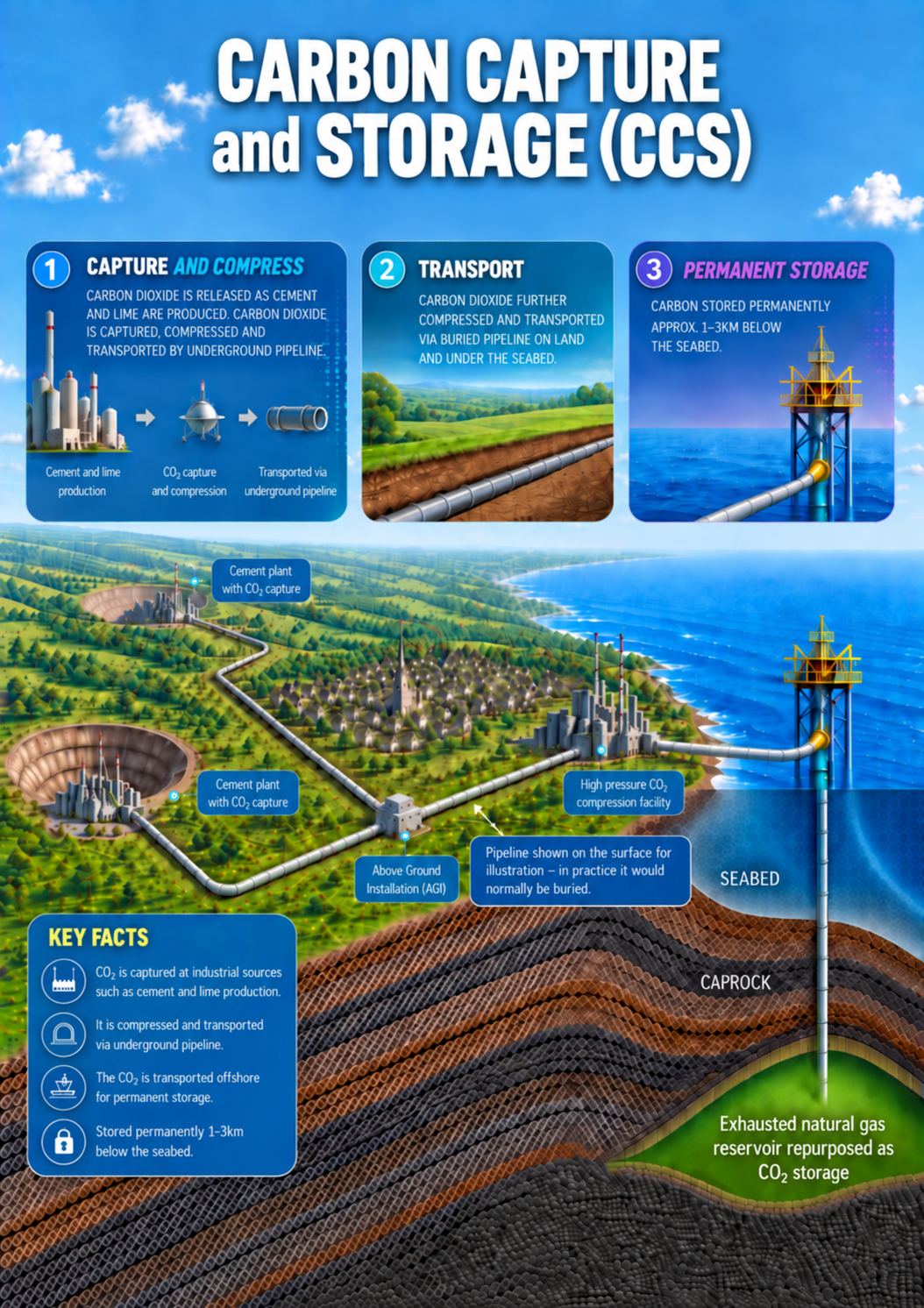
The Peak Cluster project is designed to capture the CO₂ emissions created at a number of cement manufacturing plants in the Peak District.
The CO₂ gas will be collected, cleaned and compressed. It will then transported by pipeline across the North West of England to the Wirral.
At a plant in the Wirral the CO₂ gas will be compressed further and then transported offshore by pipeline to be pumped into depleted gas fields in the Irish Sea.
The project will involve the construction of CO₂ cleaning and compression plants at the existing cement works, a pipeline designed to carry approximately 3 million tons of CO₂ a year, a number of “AGIs” (Above Ground Installations) and “BVSs” (Block Valve Stations), a large AGI in the Wirral and other infrastructure.
Peak Cluster Ltd has created a factsheet that details the project: Peak Cluster factsheet.
For more details on all aspects of the project visit the Peak Cluster website.
A generalised infographic of a typical CCS project of this type is shown above.
The source
Carbon dioxide and cement manufacturing
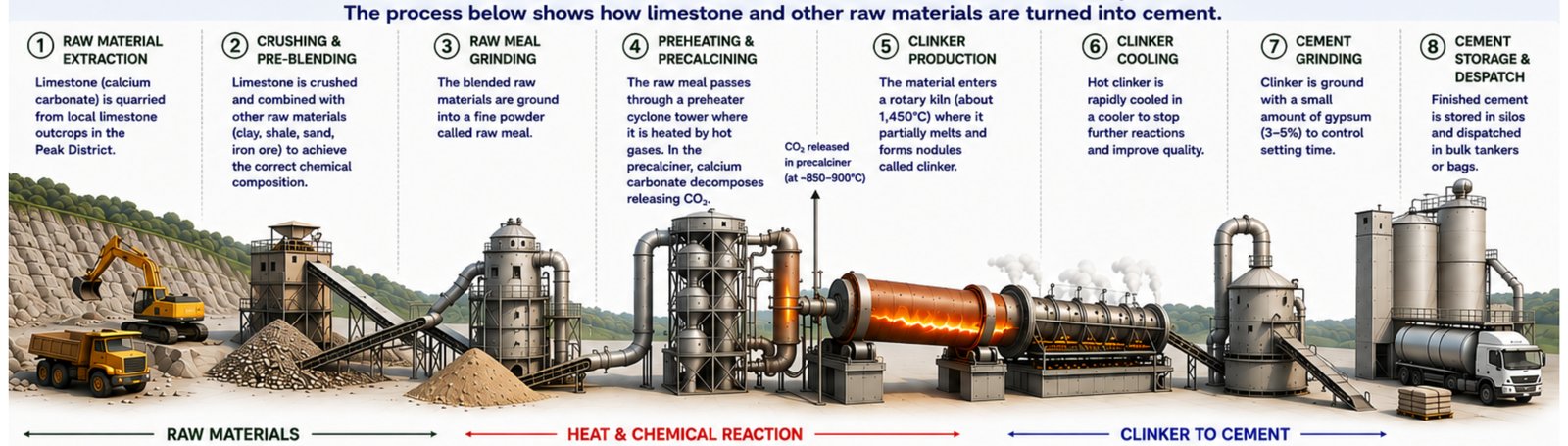
A typical process for producing cement is illustrated below. The process used to convert limestone to lime and cement is essentially the same process that has been used for thousands of years.
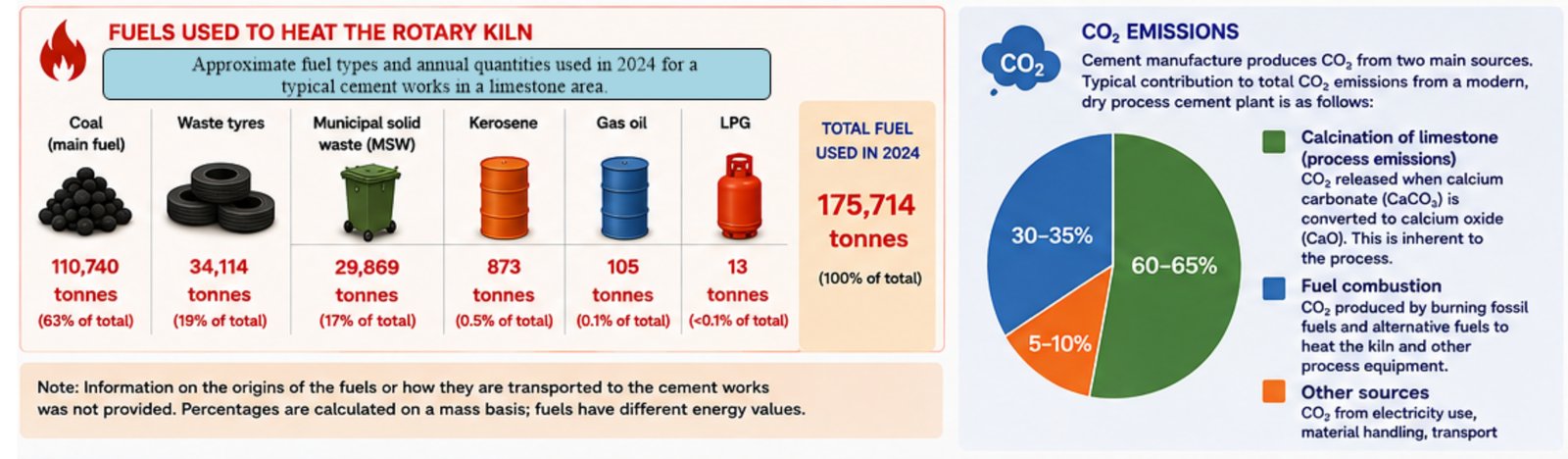
Carbon Dioxide is produced in large quantities at cement manufacturing plants in the Peak District. Carbon Dioxide emissions during the cement manufacturing process come from two main sources:
- 1) Fuel such as coal and oil that is burnt to generate the very high temperatures required by the process; and
- 2) Calcination — the chemical reactions that are involved in converting limestone to clinker.
For each ton of cement manufactured by the above process approximately 0.8 to 0.9 tons of carbon dioxide are generated and this is currently released into the atmosphere.
The route
The proposed pipeline
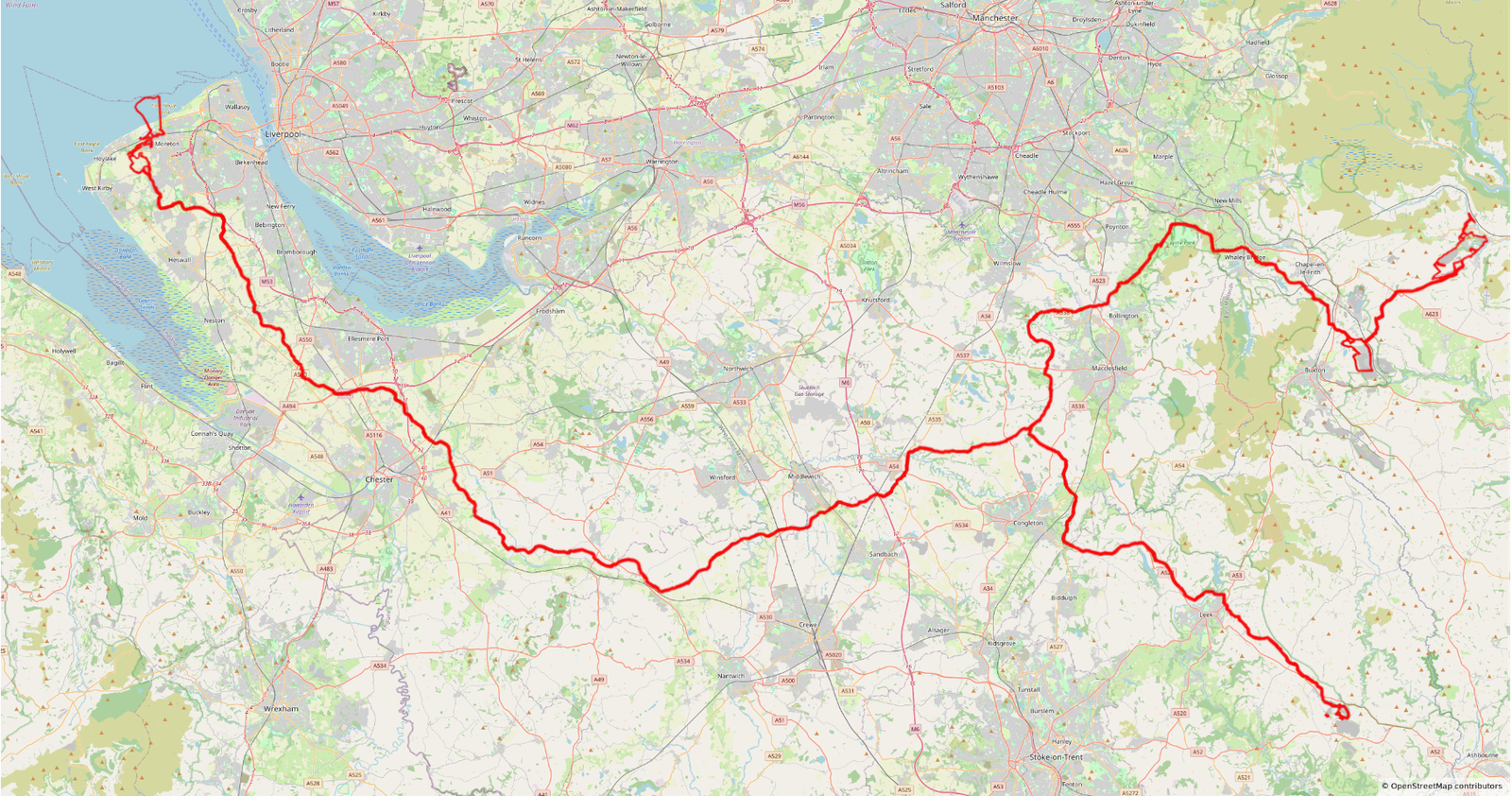
The Peak Cluster Project pipeline is proposed to be constructed as shown in the map below. Location of the pipeline in this map is approximate only and is based on currently available information from Peak Cluster Ltd. For detailed information about the route around Whaley Bridge see the ROUTE page
For a more detailed route map there is an interactive map on the Peak Cluster website
Infrastructure
The location and design of Above Ground Installations and Block Valve stations
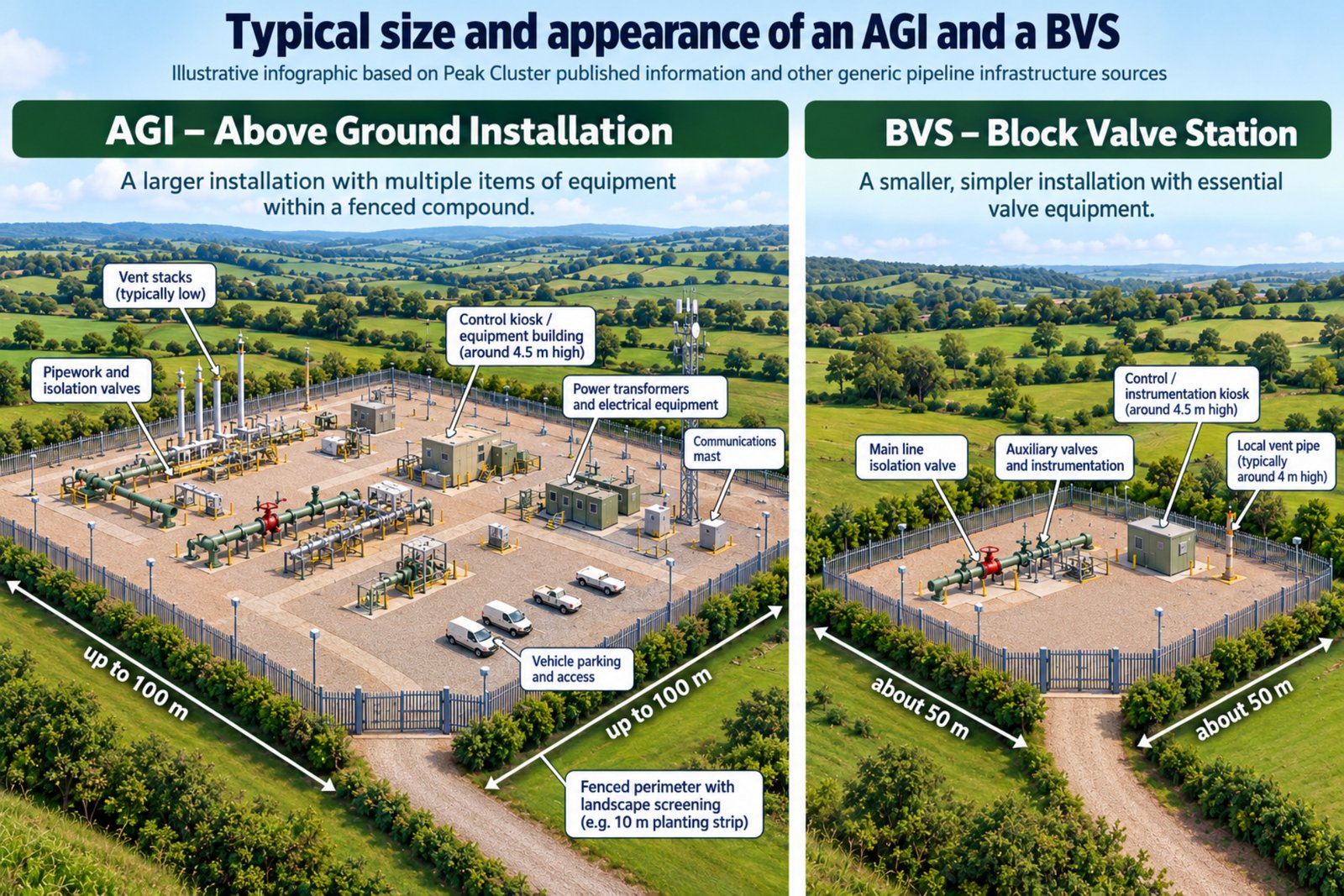
The Peak Cluster project's planned above-ground installations (AGIs) and Block Valve Stations (BVSs) are distributed across its ~200km pipeline network. The actual location and design of these structures is not yet finalised. The two images below are generalised representations of how these facilities may look based on currently available information.
More information can be found in this Peak Cluster factsheet.
Programme
Project timeline for approval and construction
The Peak Cluster Project timeline for approval and construction is shown below.

Information based on Peak Cluster Environmental Impact Assessment and other published material. Subject to change.